Shandong Yichemet Co., Ltd

What is sodium carbonate (soda ash)?
Upload Time:
Jun 08, 2026
Soda ash, chemically named Sodium Carbonate (Na₂CO₃), is an essential inorganic chemical raw material. Though commonly referred to as "alkali", it is chemically classified as a salt (strong base weak acid salt) rather than an alkali.
Soda ash, chemically named Sodium Carbonate (Na₂CO₃), is an essential inorganic chemical raw material. Though commonly referred to as "alkali", it is chemically classified as a salt (strong base weak acid salt) rather than an alkali.
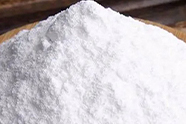
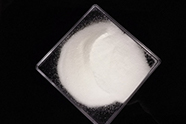
Basic Properties: At room temperature, it appears as an odorless white powder or granule, and is highly soluble in water. Its aqueous solution is strongly alkaline with a pH value of approximately 11.6. It is hygroscopic. When exposed to air for a long time, it absorbs moisture and carbon dioxide, gradually caking and converting into Sodium Bicarbonate.
Physical Forms: Based on density and application purposes, it is mainly divided into Light Soda Ash (white crystalline powder with low density) and Dense Soda Ash (fine white granules featuring higher density and good fluidity).
Major Applications: As one of the key products among the "three acids and two alkalis", soda ash is known as the "Mother of Chemical Industry". The glass industry, particularly flat glass manufacturing, is its largest downstream sector, accounting for around 50% of total consumption. It is also widely used in detergents, chemical processing, metallurgy, textiles, food production (such as leavening agents and neutralizers for flour products) and other fields.
Relevant News

Shandong Yichemet Co., Ltd